
Brightside Coffee Roasters is a four-person operation in Portland that ships single-origin beans to about 6,000 weekly subscribers and 22,000 occasional buyers. Email is their second-biggest channel after Instagram — when the inbox works, the wholesale orders, the new-roast announcements, and the seasonal subscriptions all work with it.
In late 2024, the inbox stopped working.
What broke
Three things hit at the same time.
The Gmail and Yahoo February 2024 rules tightened authentication requirements. Brightside's old setup — SPF, but DMARC at p=none and DKIM on the platform's shared key — quietly failed alignment on a meaningful share of sends. Their opens, which had been hovering around 28%, slid to 18% over six months, then to 14% by November.
At the same time, their platform's pricing tier had crept up with their list. They were paying about $580/month for 28,000 contacts on a legacy ESP they'd been on since 2019. Most of that list — they hadn't checked in three years — was dead.
And their biggest send of the year — the November holiday subscription gift drop — went out at 11pm Eastern instead of 11am because the platform queued them behind their other customers' Black Friday blasts.
"We were paying a lot of money to send mail to people who weren't getting it. The math stopped making sense."
— Brightside founder
What they changed
Three deliberate moves over six weeks. Not a redesign, not a re-brand, not a "let's rethink our content strategy." Just the boring infrastructure work most senders skip.
1. They cleaned out 22% of the list on purpose
Anyone who hadn't opened anything in 12 months got one re-engagement email. The 6,200 who didn't open the re-engagement got moved to a suppressed list. They didn't try to "save" them. The bottom of an email list is rarely revenue — it's the ballast that drags down everyone else's deliverability.
The list went from 28,000 to 21,800. The platform bill alone dropped a third overnight.
2. They fixed authentication for real
DMARC moved from p=none to p=quarantine with a real RUA mailbox they actually monitored. SPF was tightened to -all. DKIM was upgraded to per-customer keys (their new platform gave them that out of the box; the old one didn't). One-click unsubscribe via the RFC 8058 header was switched on.
None of this was visible to customers. All of it mattered to the ISPs.
3. They moved off the legacy platform
The platform switch was the last move, not the first. They needed the list cleanup and authentication done before the move so the new IP wouldn't inherit a bad reputation. Once those were stable, the migration took 90 minutes — list imports, suppression imports, the holiday-drop template, two automations.
What happened
The first send after the switch was a Tuesday morning newsletter — 21,800 sends, no special announcement.
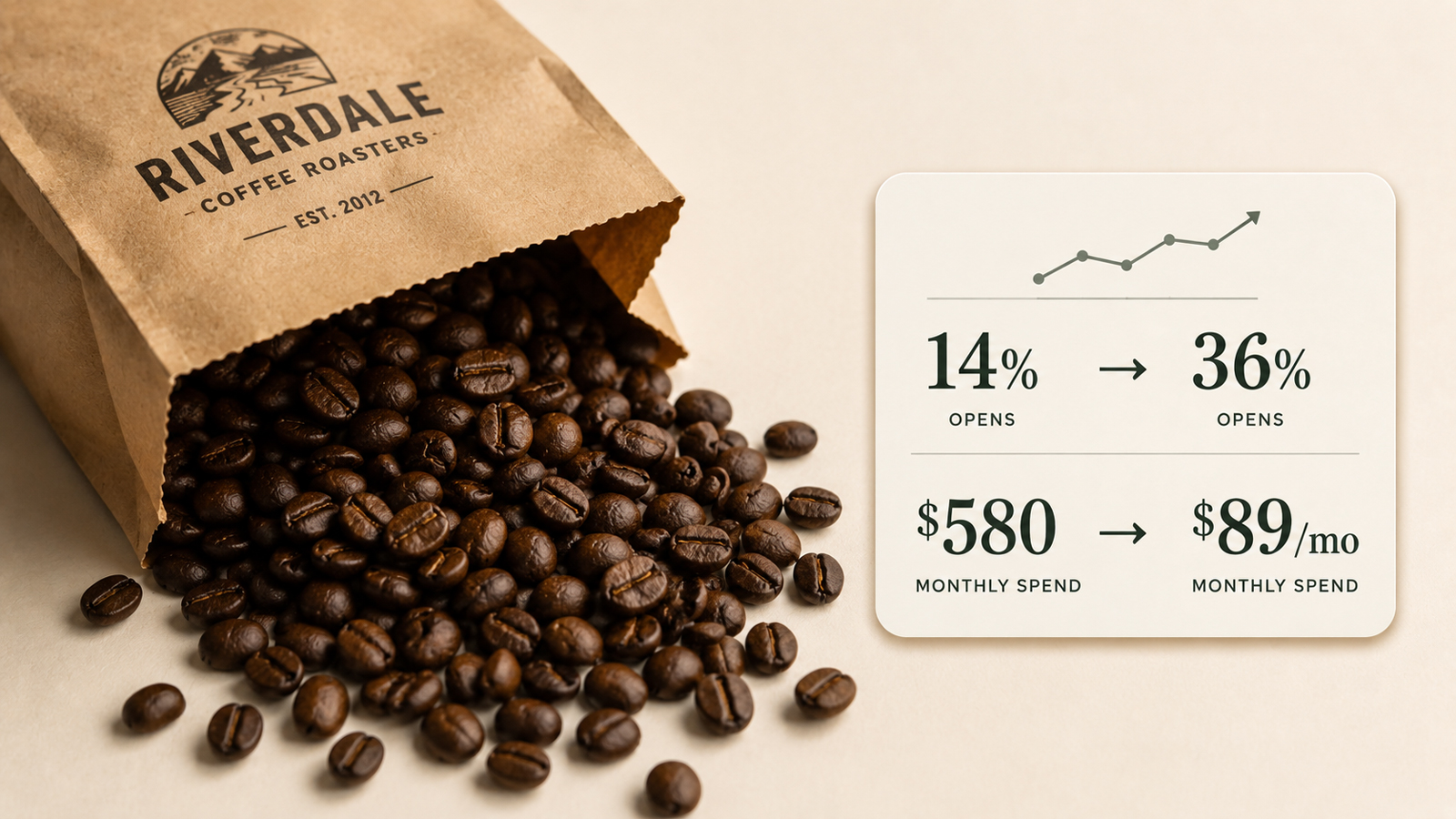
- Open rate went from 14% → 32% on send #1, then settled around 36% by week three.
- Click rate went from 1.1% to 3.8%.
- Mark-as-spam rate dropped from 0.42% to 0.08%.
- Weekly revenue from email, which had been declining month over month, was up 22% by week six and 31% by week twelve.
- Platform bill dropped from $580/mo to $89/mo. (84% saving.)
None of those numbers are because the emails got better. The emails are the same emails. What changed is who got them, whether the ISPs let them through, and how much the operator was paying for the privilege.
The holiday test
The real test was the 2025 holiday-subscription drop, which went out a week before Thanksgiving. Same campaign as the year before. Same subject line.
- 2024 send: 28,000 recipients, 12% open, 0.6% conversion, $4,200 in orders.
- 2025 send: 21,800 recipients, 41% open, 2.4% conversion, $14,800 in orders.
A 22% smaller list, 3.5× the revenue. That's what list hygiene plus working authentication looks like.
What the operator took away
- List size is a vanity metric. Brightside spent four years growing their list and six weeks cutting it in half. The cut version makes more money.
- Authentication isn't optional in 2026. If your DMARC is at
p=noneand you're not monitoring the reports, you're flying with the windows iced over. You can't see what's happening. - The platform you're paying for might not be helping. Brightside's legacy ESP had been charging them more every year while quietly delivering worse outcomes. Nobody on either side noticed because the dashboards didn't surface the things that mattered.
- Boring work, big results. No new copy, no new design, no new strategy. Just the infrastructure cleanup most senders never get around to.
Their next move? Sunsetting any subscriber who doesn't open within 90 days, not 12 months. The list will keep getting smaller. The revenue will keep going up.